
Light and privacy
on your terms.
Not the blind's.
Day & Night blinds use alternating sheer and opaque bands so you can dial in exactly how much light comes in. Full view in the morning, full privacy by evening. One blind, no compromises.
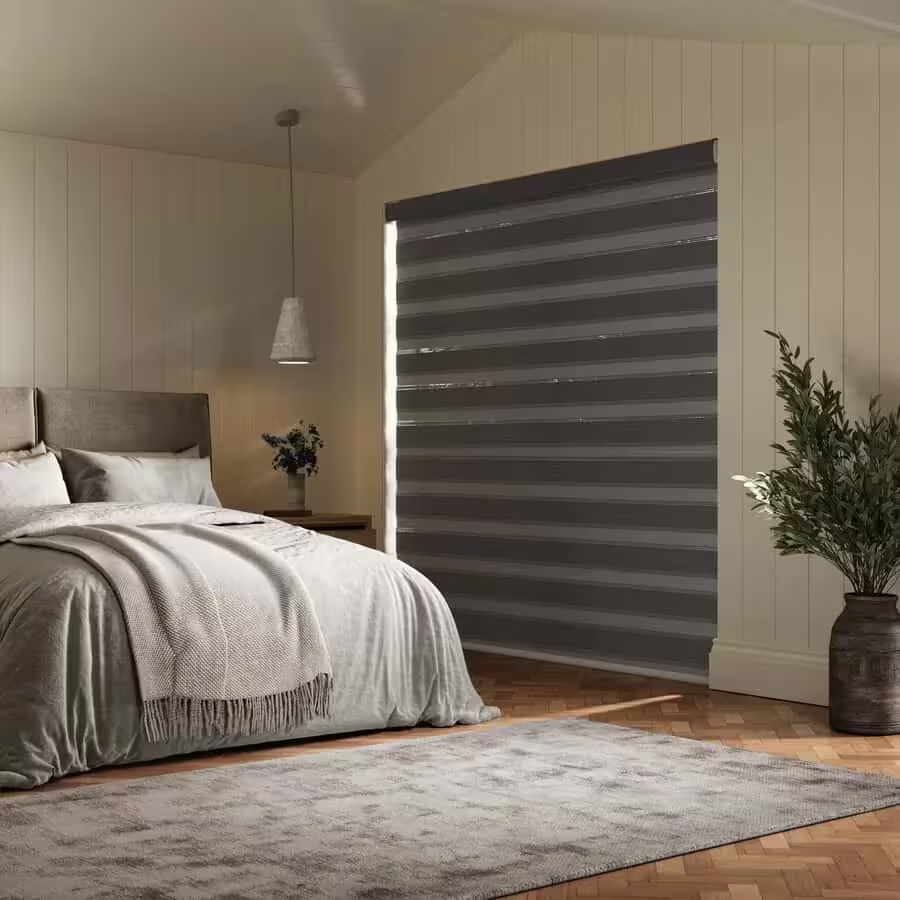
combinations available
Day & Night Blind: How it works
how Day & Night Blinds Work
Two layers of fabric. One blind.
A Day & Night blind runs two pieces of fabric on a single roller: one sheer, one opaque. They sit in front of each other in alternating horizontal bands across the full width of the blind.
When you rotate the bottom rail, the two layers shift relative to each other. Line up sheer over sheer and light floods in. Rotate further until opaque covers sheer and you get privacy without losing all the light. The position in between gives you a soft, diffused glow with nobody seeing in.
Rotate to control light
A gentle turn of the bottom rail shifts the bands. You can land anywhere between fully open, partially screened and almost closed. No separate operating chain needed.
Privacy without blackout
In the privacy position, people outside can't see in but the room still gets natural light. It's the setting most customers use from mid-afternoon onwards in ground-floor rooms.
Single cassette, clean look
Both fabric layers sit on one headrail. There's no stacking bulk when the blind rolls up, and no secondary hardware visible from the room. It's a cleaner finish than most alternatives.
What makes them different
Day & Night blinds do something no other single blind type can. Here's why that matters in practice.
Three distinct light levels from one blind
Open, privacy and near-closed. You get three genuinely different settings by rotating the bottom rail a fraction. No other single roller blind gives you that range without a second product.
Privacy position keeps people from seeing in
With the opaque bands covering the sheer bands, the room behind is hidden from outside. The blind still admits light. It's the position most people use for ground-floor rooms during the day.
No side gaps or light bleed at the edges
Because the fabric rolls as a single flat sheet, the blind sits flush against the window recess when fitted inside. Side light bleed is much less than you'd see with a standard roller blind that isn't precisely sized.
Cut to your exact window width
Band alignment only works when the blind is made to measure. An off-the-shelf Day & Night blind trimmed down loses its band spacing. Ours are cut from scratch to your measurement.
No chains or cords
The bottom rail rotates by hand. There's no pull cord, no chain mechanism and nothing dangling for children to reach. Our Day & Night blinds meet current UK child safety standards as standard.
Wipe-clean fabric, simple upkeep
The flat surface wipes down with a damp cloth. There are no slats to dismantle and no pleats that trap dust. For most households a quick wipe every few weeks is all it takes.
How Much Do Day & Night Blinds Cost
The cost of day & night blinds is influenced by the fabric construction and operating system selected.
Band width, material quality, and made-to-measure sizing all affect the final price.
Small Windows
50cm (500mm) W x 90cm (900mm) H
Prices From:
£78measured & fitted
Medium Windows
95cm (950mm) W x 120cm (1200mm) H
Prices From:
£136measured & fitted
Large windows
180cm (1800mm) W x 120cm (1200mm) H
Prices From:
£197measured & fitted
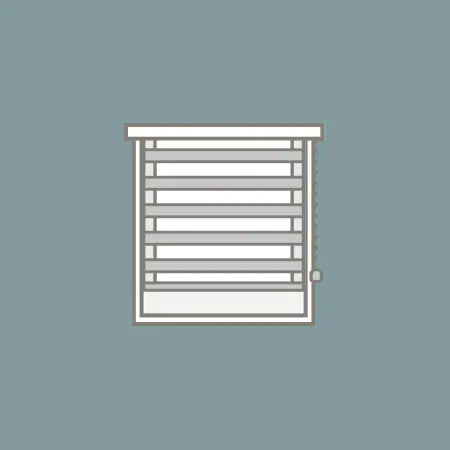
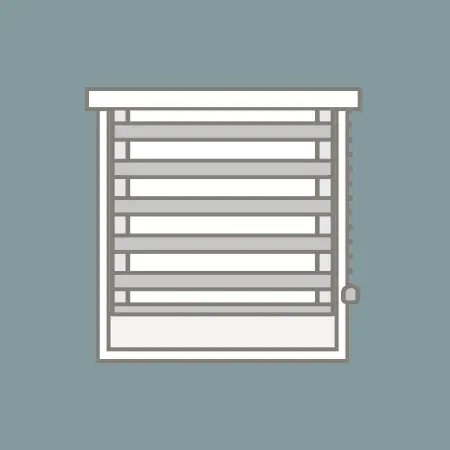
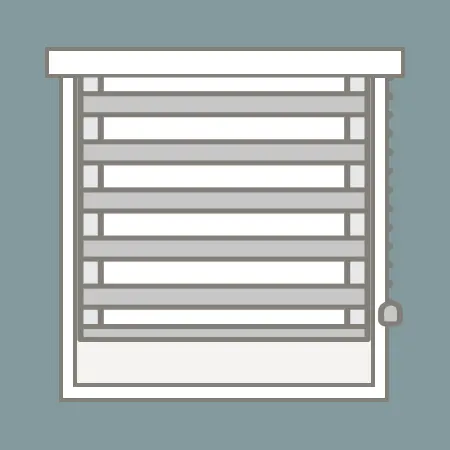
Day & Night Blinds Light control explained
Three positions. All from one blind.
Rotate the bottom rail and the two fabric layers shift relative to each other. Here's what each position actually does.
- Open
Sheer aligned with sheer
Both sheer bands line up. Maximum light comes through, the view outside is clear and the room feels open. The blind is still covering the window but it reads as almost invisible.
- Privacy
Opaque aligned with sheer
The solid bands cover the sheer ones. Light still enters, but the view into the room is blocked. This is the position most people use during the day in front-facing ground-floor rooms.
- Near-Closed
Opaque aligned with opaque
Maximum coverage. A small amount of light may creep through at the very edges where the fabric meets the frame, but the room is as dark as this blind gets. For full blackout, you'd need a different product.
A note on blackout: Day & Night blinds are not blackout blinds. In the near-closed position, the majority of light is blocked, but small amounts can seep through at the frame edges. If you need a completely dark room, a dedicated blackout roller blind is the better choice. We'll tell you this honestly at your survey if Day & Night isn't the right fit for the window you have in mind.
FREE NO OBLIGATION QUOTE
Choosing day & night blinds gives you layered light control that adapts throughout the day without fully uncovering the window.
A balanced solution that filters daylight, maintains privacy, and keeps the room comfortable from morning to evening.
- Precise measuring carried out by local specialists
- Guidance based on glare levels and viewing height
- Voile and dim-out fabrics demonstrated in your lighting
- Friendly consultation with no pressure to commit
- Clear quotation outlining all options discussed
- Appointment times arranged to suit your availability
Day & Night Blinds Fabrics & finishes
Choose your fabric type
Both the sheer and opaque bands are available in a wide range of weights, colours and opacities. The fabric choice affects how much light comes through in the open position and how much warmth the blind retains.
- Most popular
Light Filtering Sheer
The standard sheer option. Lets in good natural light in the open position while softening direct sun. Works well in living rooms and home offices where glare is a consideration.
- Maximum cover
Blackout Opaque
The opaque bands in a dense, coated fabric. In the privacy and near-closed positions this gives as much light blocking as this type of blind can offer. Still not a full blackout, but significantly darker.
- Insulating
Thermal Lined
A thicker fabric construction that reduces heat loss through the window. Best suited to north or east-facing rooms that stay cold in winter. Light still gets through in the open position, just slightly softened.
- Decorative
Textured & Patterned
Subtly textured or printed fabrics for rooms where the blind is a visual feature, not just a practical one. The pattern sits on the opaque bands and shows most clearly in the privacy position.
Day & Night Blinds vs Other Window Coverings
Choosing the right window covering often depends on light softness, window shape, and how much space you want the blind to occupy when open.
Consider whether you want gentle daylight diffusion, a neat appearance within the frame, or a solution suited to conservatories and glazed areas.
For compact stacking and subtle coverage, pleated blinds provide a tidy profile, while other styles may prioritise full blackout or heavier decoration.
| Feature | Day & Night Blinds | Roller Blinds | Venetian Blinds |
|---|---|---|---|
| Light control | Gradual and adjustable | Mostly on/off | Directional |
| Daytime privacy | Yes without darkening | Limited | Partial |
| View outside | Maintained when aligned | Lost when lowered | Interrupted by slats |
| Glare reduction | Very good | Basic | Good |
| Operation frequency | Ideal for frequent adjustment | Occasional use | Moderate adjustment |
Best applications
Where they work best
Day & Night blinds suit any room where the balance between light and privacy changes through the day. These are the six situations where they consistently outperform other blind types.
- 01
Ground-floor living rooms
Road-facing front rooms need to feel open but not exposed. A Day & Night blind in the privacy position lets afternoon light in without giving the street a view of your sofa.
- 02
Home offices
Screen glare is a genuine productivity problem. The partial-open position cuts direct sun on the monitor while keeping the room well-lit. No need to choose between brightness and comfort.
- 03
Dining rooms
Light shifts dramatically from lunchtime to an evening meal. A quick rotation changes the mood of the room without needing different window dressings for different occasions.
- 04
Bedrooms (light sleepers)
Not a full blackout option, but in the near-closed position they're suitable for people who don't need complete darkness. If you do need total darkness in the morning, a blackout roller is more appropriate.
- 05
Kitchens with a garden view
Morning sun from the east can make a south-facing kitchen dazzling. Day & Night blinds soften the glare during bright spells, then open fully when the light is more manageable later in the day.
- 06
Large patio and bifold doors
Wide glass doors need a blind that keeps its proportions at scale. Day & Night blinds can be made to measure for wide spans, and the horizontal bands sit neatly regardless of the door's width.
Other blind types we make
Day & Night Blinds
Alternating sheer and opaque bands for adjustable light and privacy from a single blind.
Roller Blinds
Single fabric sheet on a roll. The most straightforward option, available in blackout and light-filtering weights.
Roman Blinds
Soft horizontal folds that stack neatly when raised. A traditional style that works with heavier, more decorative fabrics.
Vertical Blinds
Vertical louvres that tilt and traverse. A practical choice for wide windows, patio doors and office spaces.
Questions about Day & Night blinds
Straightforward answers. If something's not covered here, ask at your free survey and we'll tell you exactly what applies to your window.
Are Day & Night blinds the same as zebra blinds?
Yes, they're the same product under different names. Day & Night, Vision, Zebra and Dual Roller are all terms used by different manufacturers for the same alternating-band mechanism. The performance is identical regardless of what the retailer calls them.
Do Day & Night blinds fully block out a room?
No. In the near-closed position, most light is blocked but small amounts can seep through where the fabric meets the frame edge. If you need a completely dark room (for a nursery or a bedroom where you work nights, for example), a dedicated blackout roller blind is the right choice. We'll be clear about this at your survey.
How do you clean a Day & Night blind?
Wipe down with a damp cloth in the open position, working across the bands from top to bottom. For anything more stubborn, a mild soapy solution works on most fabrics. Don't soak the blind or put it through a washing machine. The fabric is not designed to be removed and replaced.
What window types do they fit?
Day & Night blinds can be fitted inside the window recess or face-fixed to the wall or frame above. They work on standard rectangular windows, bay windows (with separate blinds for each panel), patio doors and bifold doors. The bracket type changes depending on your fitting method, which we determine at the survey.
Can Day & Night blinds be motorised?
Yes. A motorised version uses an electric motor inside the headrail to both raise and lower the blind and rotate the bands. It can be operated by remote control, a wall switch or connected to a smart home system. We carry the motors for this and can advise on wiring requirements at the survey.
How long does it take from survey to fitting?
Typically two to three weeks from the survey date. We measure, place the order with our manufacturer and return to fit. Everything is done by our own team, so there's no third-party installer involved. We'll give you an accurate timeframe on the day of your survey.
Are they suitable for kitchens and bathrooms?
Kitchens: yes, provided the blind isn't positioned directly over a hob where it would catch steam or grease. Bathrooms: most Day & Night fabrics are not moisture-resistant, so a room with a shower or bath is a risk unless it's very well ventilated. We can advise on suitable fabrics at the survey if it's a bathroom window.
What's the price of a Day & Night blind?
We quote a fixed price at the survey, after measuring. That price covers the blind, any hardware and the fitting. There are no additional costs on the day. We don't give online quotes because the price varies depending on size, fabric choice and fitting method, and we'd rather give you an accurate number than an estimate you can't rely on.