
Perfect fit
honeycomb.
The thermal choice.
Honeycomb cells trap still air between the glass and your room — the most thermally efficient blind type in the perfect fit range. No drilling, clips directly onto uPVC beading, and works in conservatories where temperature swings would destroy other blind materials.
- Best thermal performance in the PF range
- Ideal for conservatories
- No drilling — clips onto beading
- Single & double cell options
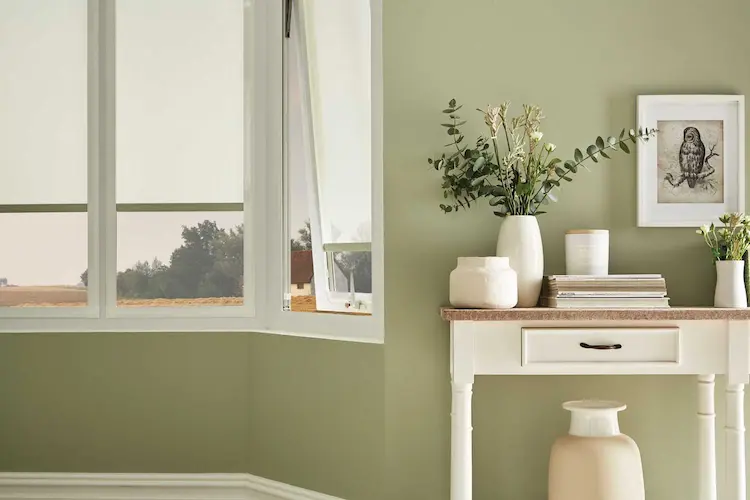
Warm in winter.
- Conservatory panels
- Casement windows
- Tilt & turn windows
- Velux & roof windows
How it works
The honeycomb structure traps still air and still air insulates.
Cellular blinds are made from a fabric that is folded and bonded to create a series of hollow tubes running horizontally across the blind — when seen from the side, these look like honeycombs. When the blind is down, these cells are sealed at the front and back, trapping a column of still air inside each one. Still air is a very effective insulator. It's the same principle used in double-glazing and cavity wall insulation — a trapped air gap that slows heat transfer in both directions.
- Honeycomb cell structure
The fabric is folded and glued to create sealed horizontal tubes. Each tube is open at the sides and sealed at the front and back faces.
- Trapped air reduces heat transfer
Reduces the rate at which heat escapes through glass in winter and slows solar heat gain through glass in summer.
- Pressure-fit — no drilling
The outer aluminium frame clips onto pressure-fit brackets seated in your uPVC glazing bead. No tools, no damage.v
Warm in winter. Cool in summer.
The honeycomb cell acts as a thermal buffer in both directions — it slows heat loss in cold weather and reduces solar heat gain in warm weather. This is why cellular blinds are the most popular choice for conservatories.
- 30%Of unwanted summer heat enters through windows
- 2×The insulating performance of a double-cell vs single-cell
- BothWays — cells reduce heat gain in summer and loss in winter
- NoEnergy use — passive insulation from still air
Key features
Why cellular blinds are the right choice
Cellular blinds are the most thermally effective option in the perfect fit range. They prioritise insulation and energy performance.
- Best thermal performance
No other perfect fit blind type comes close for thermal insulation. The trapped air gap slows heat transfer in both directions.
- Built for conservatories
Addresses both freezing winters and sweltering summers simultaneously, extending the usable season significantly.
- No drilling
Brackets press between glass and glazing bead by thumb — no tools, no damage to the uPVC framework.
- Cord-free safe
The operating bar is pushed up or down by hand. All operating elements are contained within the frame.
- Opens with the window
Clips to the glazed pane, not the wall, so the blind pivots with the window when opened for ventilation.
- Dimensionally stable
The polyester cellular fabric does not expand, warp, or degrade under the temperature swings.
Cell structure
Single cell or double cell?
Both use the same honeycomb principle — the difference is how many layers of air are trapped.
One layer of honeycomb cells — a single row of air-filled tubes. Good thermal performance for most rooms and a lower profile within the frame. The right choice for living rooms and standard casement windows.
Two bonded layers of honeycomb cells — a dual row that doubles the insulating air volume. Significantly better thermal performance than single cell. The recommended choice for conservatory installations.
Opacity options
Three light levels — same thermal performance
The honeycomb cell structure provides insulation regardless of which opacity you choose.
- Most popularSheer / translucent
Allows soft diffused light through the cell faces while providing good daytime privacy. Most popular for conservatories.
- PracticalRoom darkening
Blocks most direct sunlight while allowing some diffused light through. Reduces solar heat gain more effectively than sheer.
- Best blackoutBlackout
Blocks direct light transmission through the fabric face. Suited to loft bedrooms, Velux windows, and conservatory sleeping spaces.
Best applications
Where cellular blinds work best
The performance choice — they shine wherever thermal control is the priority.
- 01Conservatories
The clearest use case. One blind per pane. Double-cell handles temperature extremes and extends the usable season.
- 02Velux & roof windows
Adds meaningful insulation at night and significantly reduces solar heat gain on hot summer days.
- 03
Rooms above garages
Reduces the rate at which heat escapes through large windows in poorly insulated spaces.
- 04North-facing rooms
Acts as a thermal buffer, slowing heat loss on cold nights and overcast days without losing brightness.
- 05Bedrooms
Blackout cellular blinds keep bedrooms both dark for sleep and thermally comfortable throughout the year.
- 06Large south-facing windows
Reduces solar heat gain substantially on hot days without the need for air conditioning.
Cellular blind FAQs
More questions? We'll go through everything at your free survey.
What is the difference between honeycomb and cellular blinds?
They're the same product — two names for the same blind type. "Cellular" refers to the cell structure; "honeycomb" refers to how those cells look in cross-section. Both terms are used interchangeably in the industry.
Which is better for a conservatory — single or double cell?
Double cell for a conservatory — always. Conservatories experience the most extreme temperature variation of any room, and the added insulation of a second air layer makes a meaningful, measurable difference.
Do cellular blinds keep rooms cooler in summer?
Yes — the honeycomb cell reduces heat transfer in both directions. In winter, it slows the rate at which warmth escapes. In summer, it reduces solar heat gain through the glazing.
Are perfect fit cellular blinds child-safe?
Yes. The blind is operated by pushing or pulling the bottom bar by hand — no cord, no chain. All operating elements are enclosed within the frame. Meets current UK child safety regulations.