
Solid Panel Shutters
Complete privacy
with a classic,
heritage-inspired finish
Solid panel shutters feature full wooden panels that completely cover the window, blocking out light and enhancing privacy. Ideal for bedrooms and period homes, they offer a classic, traditional look while also helping to improve insulation and reduce draughts.
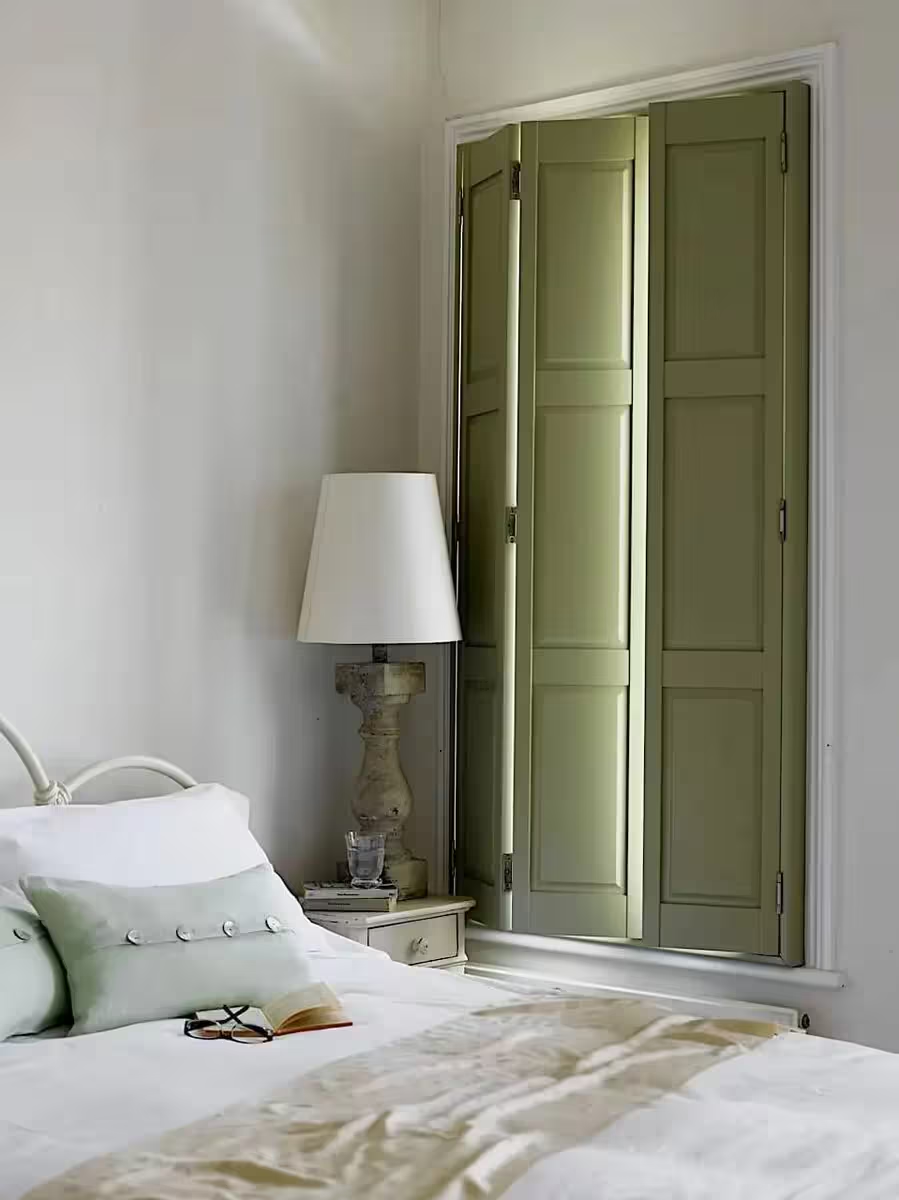
800×1000px — faux wood shutters

What Are Solid Panel Shutters
Solid panel shutters are perfect for creating a darker, more private space, especially in bedrooms. Their robust design provides excellent insulation and noise reduction, while adding a timeless, heritage-style finish to your interiors.
Why Choose Solid Panel Shutters
Solid panel shutters have no louvres at all — the panel face is a single unbroken painted board. When closed, they block light completely and give total privacy. When open, they fold flat against the wall and disappear entirely. Simple, durable, and striking.
Complete blackout when closed
With no louvres to let light through at an angle, closed solid panels block light as effectively as any window covering available. There are no slat gaps, no tilt rod slots, and no light bleed at the panel edges if the reveal fit is correct. The right choice for bedrooms, nurseries, and home cinemas where total darkness matters.
Better thermal and acoustic performance
A solid panel has no gaps for air to move through — closed, it traps a larger still air mass against the glass than louvred panels can. This makes solid shutters noticeably more effective at reducing heat loss on single-glazed and older double-glazed windows, and better at dampening street noise in front-facing bedrooms.
Distinctive look — bold and considered
Without louvres breaking up the surface, a solid panel shutter reads as a strong architectural element rather than a window dressing. Popular in period properties where panelled shutters are historically appropriate, and in contemporary interiors where the clean unbroken face is a deliberate design choice rather than a compromise.
No cords — fully child-safe
Solid panel shutters have no louvres and therefore no tilt rod — the panel is a fixed face with no adjustable parts. Panels open and close on stainless steel butt hinges operated by hand. With no cords, chains, or moving components beyond the hinge, solid panel shutters meet current UK child safety regulations without any additional accessories.
Raised and fielded panel options
The solid panel face can be plain and flat (a smooth painted board — clean and contemporary) or raised and fielded (a traditional moulded profile with a recessed centre — suited to period properties and rooms with decorative cornicing). Both options are available in the same frame profiles and paint finishes as louvred shutters.
Made to measure for your reveal
Each panel is cut to the exact internal dimensions of the window reveal. Mid-rails can divide a tall panel into upper and lower hinged sections for easier handling. Solid panels can cover a full window as a standalone installation or be used as the lower section beneath a louvred upper panel — a combination that maximises privacy at the bottom with light control above.
Limited time offer
Book your free survey and lock in 25% off today.
No obligation. No deposit. We come to you, measure every window, and give you a fixed price with the discount already applied.
Book a Free SurveyFree survey · 25% off all styles · Fixed price · Professional fitting includedHow solid panel shutters work
Solid panel shutters are the simplest shutter system available — a painted panel face in a timber frame, hung on hinges within the window reveal. There are no louvres, no tilt rod, and no adjustable parts. Open or closed is the full range of operation.
The full-perimeter L-frame
An L-shaped timber frame is fitted to all four sides of the window reveal — top, both sides, and sill — forming the fixed surround that carries the hinge knuckles. The frame is scribed to the exact reveal dimensions on site, accounting for any out-of-square corners or uneven plaster. The frame face sits flush with the internal wall surface for a neat, built-in appearance.
Panel hinging and fold-back
Each solid panel is hung on two or three stainless steel butt hinges fixed to the side frame. On wider windows, two or more panels are hinged together in a bi-fold arrangement, stacking flat to one or both sides when open. Each panel swings a full 180° and can be held against the wall return with a magnetic shutter dog to keep the reveal clear when the window is in use.
Mid-rail and panel division
On taller windows, a horizontal mid-rail divides the panel into upper and lower hinged sections. This prevents the panel face from warping across a large unsupported span and makes the panels easier to open individually. The mid-rail is part of the frame design — on raised and fielded panels it becomes a natural visual division that suits the traditional profile.
Panel face profile and sizing
Panel width is balanced across the window opening so each panel is the same size — typically between 300mm and 600mm wide depending on the reveal width. The panel face is either flat (smooth painted MDF, no profile) or raised and fielded (moulded frame with recessed centre panel — available in hardwood). Both profiles can be combined with a louvred upper section in a split installation.
How Our Shutter Service Works
We like to do things a bit differently. No hidden costs, no confusing small print, just clear, upfront pricing. Plus, with the UK’s most thorough price beat promise, you’ll always know you’re getting the best deal.
Book An Appointemt
Book a FREE in-home appointment with your local Shutterly Fabulous specialist
Free Home Visit
Your local Shutter Specialist will measure up, explore design options, and provide a tailored quote.
Installation Day
The same Specialist returns to install. All you have to do is sit back, relax, and enjoy the fabulous transformation.
SOLID PANEL SHUTTER FAQS
What are solid panel shutters best used for?
Solid panel shutters are the best choice wherever complete blackout is the priority — bedrooms, nurseries, and home cinemas benefit most. They also suit period properties where historically accurate panelled shutters are more appropriate than louvred ones, and contemporary rooms where the clean, unbroken face is a deliberate design feature rather than a functional compromise.
What's the difference between solid panel and louvred shutters?
Louvred shutters have horizontal slats (louvres) that can be tilted to control light and airflow while the panels remain closed. Solid panel shutters have no louvres — the face is a plain or moulded board. Closed solid panels block light completely and perform better thermally and acoustically, but offer no intermediate light setting — it's fully open or fully closed.
What is a raised and fielded panel — and is it right for my home?
A raised and fielded panel has a moulded timber frame around a recessed centre section — the same profile used on traditional internal doors and panelled joinery. It's the historically appropriate style for Georgian, Victorian, and Edwardian properties where flat MDF panels would look out of character. If your home has period cornicing, skirting, or architrave with a moulded profile, raised and fielded shutters will complement it.
How do I clean solid panel shutters?
Wipe the panel face with a lightly damp cloth — the painted surface is easy to maintain and resists marking better than louvres because there are no horizontal surfaces to collect dust. Wipe the frame and hinge faces with a dry cloth. On raised and fielded panels, use a soft brush to clear dust from the moulded rebates where a flat cloth can't reach.