
Window Fly Screens
Made-to-measure
window fly screens
that actually fit
Every window is a different size. Our screens are cut to your exact measurements not adapted from stock sizes, so the mesh sits flush with no gaps for insects to slip through.
How it works
A frame that fits your window — not the other way around
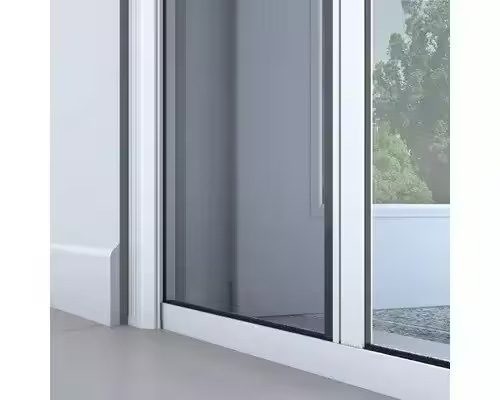
A window fly screen is an aluminium frame, cut precisely to your window opening, with a mesh panel tensioned inside it. It sits in the window reveal or clips onto the frame itself, no drilling required for most installations.
Unlike off-the-shelf screens that rely on foam compression strips to fill the gap, our made-to-measure frames are built to the millimetre. There is no compression gap for insects to find.
We measure at your home
Our surveyor takes exact measurements of each window opening, not the outer frame. This is the only way to guarantee an airtight fit around the mesh.
Made in our own workshop
The frame is cut, mitred, and assembled to your survey measurements, not sourced from a wholesaler and trimmed down. We make it ourselves, which is why we can stand behind the fit.
Fitted, then done
Our fitter arrives with your finished screens and installs each one in minutes. You do not need to be handy. You just need to open the door.
Why choose window fly screens
Six things worth knowing before you buy
No gaps, no insects
A made-to-measure frame leaves no compression gap around the edges. Midges, wasps, and moths cannot squeeze through the sides, which is where off-the-shelf screens always let insects in.
Unrestricted airflow
Standard fibreglass mesh is 18×16 threads per inch, fine enough to stop insects, open enough to not reduce airflow noticeably. You open the window and it still feels like an open window.
Works with your existing window
The screen fits over or within the window reveal, your window still opens and operates normally. You do not need to change anything about how you use the window.
Aluminium frame — built to last
The frame is extruded aluminium, it will not warp, rot, or rust outdoors. The mesh is replaceable separately if it ever gets damaged, without needing a new frame.
Near-invisible from indoors
Charcoal mesh is available as an option, the darker colour greatly reduces the visual contrast of the mesh, making the screen much less noticeable when you look out through the window.
Easy to remove for cleaning
Fixed frame screens clip out without tools for window cleaning/ you do not need a fitter to return. Pop it out, clean the glass, clip it back in. Takes about thirty seconds per window.
Choose your screen style
Retractable or fixed frame,
which is right for you?
Both styles are made to measure. The difference is in how you use them day to day. Pick the one that suits how you live with your windows.
- Retractable
Retractable Window Screen
The mesh rolls up into a slim cassette fixed above the window opening. When you want fresh air without insects, pull it down and clip it in place. When you want the full view, roll it away in seconds.
Explore retractable screens →Completely out of sight when not in useIdeal for casement and tilt-and-turn windowsBest choice where appearance is a prioritySlightly higher cost than fixed frame - Fixed Frame
Fixed Frame Window Screen
A rigid aluminium frame with mesh, fitted permanently into the window reveal. The most cost-effective option for year-round insect protection. Easy to pop out for cleaning without tools, then clip straight back in.
Explore fixed frame screens →Most economical window screen optionStays in place, no daily deployment neededClips out in seconds for glass cleaningWorks across all window types
- Standard
Fibreglass Mesh
18×16 mesh, the most widely used window screen material. Resists corrosion, does not dent or crease, and cleans easily with a damp cloth. Good all-round choice for most homes.
- Charcoal
Charcoal Mesh
The same 18×16 weave as standard but in a dark grey-black tone. Significantly reduces the visual presence of the screen when you look out, the view through feels much cleaner and less obstructed.
- Pollen filter
Pollen Filter Mesh
A finer weave that blocks most airborne pollen particles alongside insects. Worth considering for bedrooms and living rooms if anyone in the household suffers from hay fever or seasonal allergies.
- Pet-resistant
Pet-Resistant Mesh
A heavier-gauge polyester mesh, significantly harder for cats and dogs to scratch or push through than standard fibreglass. Fitted in a reinforced aluminium frame for extra rigidity. Not indestructible, but much more resistant to daily pet contact.
Frame colours
Matches your window frame
We stock frame profiles in five standard colours. If your windows are a non-standard colour, ask at survey, we can usually source a close match.
- White
- Cream
- Brown
- Grey
- Anthracite
Where window fly screens work best
The right room, the right reason
- 01
Bedrooms
The most requested room. Open the window overnight without being woken by mosquitoes or midges. A retractable screen keeps the window looking normal during the day; a fixed frame is the low-maintenance alternative.
- 02
Kitchens
Cooking generates heat and smells, open the window to ventilate without inviting every flying insect in the garden inside. Fixed frame screens are the practical choice here: permanent, easy to clean, and unobtrusive.
- 03
Living rooms
Charcoal mesh is worth considering here, the reduced visual presence of the screen means you are not constantly reminded it is there when you are sitting looking out. The view stays clear, the insects stay out.
- 04
Conservatories & extensions
Glass-heavy extensions heat up quickly and need ventilation. Multiple window screens across the same space are common, we survey and price all of them in one visit, and they are all fitted on the same day.
- 05
Home offices
Working from home with the window open is only pleasant if you are not constantly brushing flies away from your screen. A fixed frame screen on the window behind your desk makes a genuinely noticeable difference in summer.
- 06
Children's rooms
Parents often want windows open in children's rooms overnight but worry about insects. Pollen filter mesh is a popular choice here, it keeps the room cooler, quieter, and pollen-free for children who suffer from seasonal allergies.
Also in the fly screen range
Other screens we fit
Window Fly Screens
Retractable and fixed frame screens for casement, tilt-and-turn, and sash windows.
You are herePleated Door Screens
Concertina folds for single and double doors stack neatly to the side when open.
View screens →SpecialistPet-Resistant Screens
Heavy-gauge mesh in a reinforced frame for homes with cats and dogs that like to lean on windows.
View screens →Roof windowRoof Window Screens
Made to fit Velux, Fakro, and bespoke skylights fitted inside the frame so the window still opens fully.
View screens →Customer reviews
What customers say about their window screens
"Had fixed frame screens fitted to all four bedroom windows. The difference overnight is remarkable — we can sleep with the windows open now and there are no midges at all. The charcoal mesh means you barely notice they are there."
"Went for the retractable option in the living room and kitchen — looks completely normal when they are rolled up. The surveyor was really helpful explaining the difference between the two types and didn't try to upsell me. Fitted in a morning."
"My daughter has bad hay fever so we went for the pollen filter mesh in her bedroom. The screens were cut perfectly to our old sash windows — not a gap anywhere. She has slept with the window open every night this summer for the first time."
Questions & answers
Common questions about window fly screens
Something not covered? Give us a call or request a survey — our team is happy to talk through your windows before you commit to anything.
What types of window do window fly screens fit?
Window fly screens can be made for casement windows, tilt-and-turn windows, sash windows, pivot windows, and awning windows. They work with uPVC, timber, and aluminium frames. The only windows that tend not to suit a standard fly screen are those with irregular or curved openings — we will tell you at survey if that applies to yours.
Should I choose a retractable screen or a fixed frame screen?
Choose retractable if you want the screen to disappear completely when you are not using it — it rolls into a cassette above the window and is virtually invisible. Choose fixed frame if you want a lower-cost, no-fuss option that stays in place year-round and clips out easily for glass cleaning. Most customers go fixed frame for bedrooms and kitchens, retractable for living rooms and anywhere they care more about the look of the window.
Do fly screens reduce light or airflow through the window?
Standard 18×16 fibreglass mesh has very little effect on light or airflow — the open area of the mesh is around 48%. You will notice a very slight reduction in direct sunlight on bright days but nothing significant. Pollen filter mesh is slightly denser and will reduce airflow a little more. We recommend standard mesh for most windows unless you have a specific reason to choose otherwise.
Can I still clean my windows with a fly screen in place?
Fixed frame screens clip out and clip back in without tools — takes under a minute per window. You do not need to book a fitter to return. Retractable screens roll up out of the way, so you clean the glass and then roll them back down. In neither case is the screen in your way when you need access to the glass.
Will fly screens keep out small insects like midges?
Standard fibreglass mesh stops midges, mosquitoes, wasps, bluebottles, and most other common flying insects. For very fine insects — some species of biting midges are extremely small — pollen filter mesh provides a tighter barrier. If midges are a particular issue in your area, mention it at survey and we will recommend the right mesh type.
How long does installation take?
A single window screen typically takes around 20–30 minutes to fit. If we are fitting screens to every window in a house, it is usually a half-day job. We will give you an accurate time estimate when we confirm the installation appointment after your survey.
What happens if the mesh gets damaged?
The aluminium frame and the mesh are separate components. If the mesh is torn or punctured, we can replace the mesh in your existing frame — you do not need a whole new screen. Contact us with the dimensions from your original survey paperwork and we can usually turn a replacement mesh around quickly.
Is there a charge for the home survey?
The survey is free and there is no obligation to proceed. Our surveyor will measure each window, show you the mesh and frame colour options, and give you a fixed price on the spot. If you decide to go ahead, that quoted price is what you pay — there are no surprises on the day of installation.
Ready to sleep with
the window open?
Book a free survey and we will measure every window you want to screen, show you the options, and give you a fixed price before we leave. No pressure, no surprises.
Free survey · Fixed price quoted on the day · North East & North West England