
Door Fly Screens
Made-to-measure
door fly screens
that close themselves
Every door opening is a different size. Our hinged aluminium screens are built to your exact measurements and spring shut automatically no propped-open gap for insects to slip through.
How it works
A screen that fits your door not the other way around
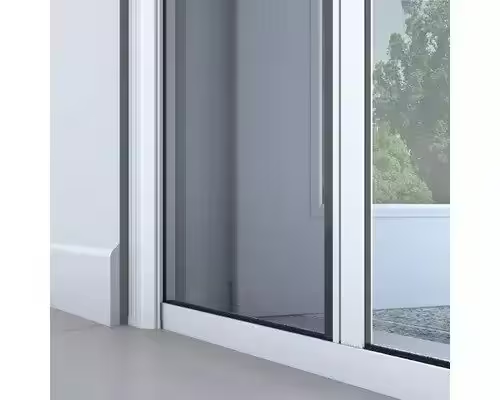
A door fly screen is a made-to-measure aluminium frame, built to your exact door opening dimensions, tensioned with mesh and hung on spring-loaded hinges. It works like a lightweight secondary door – push through it, and it closes itself automatically every time.
Unlike magnetic strip curtains or over-the-door tension screens, our frames are cut to the millimetre. There is no compression gap, no sagging section of mesh, and no edge left unprotected. The fit is the whole point.
We measure at your home
Our surveyor takes exact measurements of the door opening not the outer frame. This is the only way to guarantee a flush, gap-free fit around the mesh on every side.
Made in our own workshop
The frame is cut, mitred, and assembled to your survey measurements, not sourced from a wholesaler and adapted. We make it ourselves, which is why we can stand behind the fit.
Fitted, then done
Our fitter arrives with your finished screen and installs it in 30–45 minutes. You do not need to be handy. You just need to open the door.
Why choose door fly screens
Six things worth knowing before you buy
Keeps insects out, door open
Leave the back door open all summer without flies, mosquitoes, or midges coming inside. The fibreglass mesh aperture sits at around 1.2mm, fine enough to stop most common household insects whilst allowing full, unrestricted airflow through the door opening.
Self-closes every time
Spring-loaded hinges draw the screen shut automatically after each pass-through, so you never need to think about closing it. An optional magnetic closing strip along the latch stile creates a firm draught seal without slamming, particularly useful on doors that face into the prevailing wind.
Made to your door opening
Each frame is cut to your exact door width and height, measured to the millimetre. Rebate and face-fix installation covers virtually any external door surround, from a standard 2040 × 820mm back door to wider side entrances or single patio doors up to 1200mm across.
Rust-proof aluminium frame
Extruded aluminium with a powder-coat finish, lightweight, rigid, and unaffected by rain or humidity. Available in white, brown, and anthracite grey to match common uPVC and timber door surrounds. The frame will not warp, swell, or discolour outdoors.
Easy to clean
Wipe the mesh down with a damp cloth and mild washing-up liquid as needed. For a deeper clean, the rubber spline cord can be removed to release the mesh panel entirely, washed flat, then re-fitted in a few minutes. The aluminium frame wipes clean without any specialist products.
Safe for children and pets
No exposed cords, chains, or reachable spring mechanisms, the screen opens on light push-through and closes smoothly on its own. For homes with cats or dogs, a pet-resistant reinforced mesh upgrade is available with approximately three times the tear-strength of standard fibreglass.
Choose your screen style
Hinged frame or pleated screen —
which suits your door?
Both styles are made to measure. The difference is how you use the door day to day. Here is what distinguishes the two, so you can choose before your survey.
- Hinged Frame
Hinged Frame Door Screen
A rigid aluminium frame hung on spring-loaded hinges, operates exactly like a secondary door. Push through and it closes itself. The most robust option for year-round daily use on a busy back or side door.
Explore hinged frame screens →Self-closes after every single pass-throughMost robust choice for high-traffic doorsSuits standard and wider single door openingsBest for households with children or pets - Pleated
Pleated Door Screen
The mesh concertina-folds into a compact stack to one side of the door opening when not in use, then pulls across to cover the full opening when you want insect protection. A neater look than a hinged frame when the door is in use.
Explore pleated door screens →Folds flat to the side when you want full accessAvailable for single and double door openingsIdeal where appearance is a higher prioritySlightly higher cost than hinged frame
Mesh options
Choose the right mesh for your home
Not all mesh is the same. Our surveyor will talk through your situation and recommend the right type, but here is what to know before you book.
- Standard
Fibreglass Mesh
18×16 mesh, the most widely used door screen material. Flexible, corrosion-proof, and easy to clean. The right choice for the majority of households and the starting point for most door screen installations.
- Charcoal
Charcoal Mesh
The same 18×16 weave as standard but in a dark grey-black tone. Reduces the visual presence of the screen and improves outward visibility, particularly noticeable on doors facing a garden or a view you do not want to lose.
- Pollen filter
Pollen Filter Mesh
A finer weave that blocks most airborne pollen alongside insects. Worth considering if anyone in the household suffers from hay fever and you want to open the door in summer without the pollen count coming with it.
- Pet-resistant
Pet-Resistant Mesh
A heavier-gauge polyester mesh, significantly harder to scratch, push through, or claw open than standard fibreglass. The most popular upgrade for utility room and kitchen doors where dogs and cats go in and out regularly.
Frame colours
Matches your door frame
We stock frame profiles in five standard colours. If your door surround is a non-standard colour, mention it at survey, we can usually find a close match.
- White
- Cream
- Brown
- Grey
- Anthracite
Where door fly screens work best
The right door, the right reason
- 01
Back doors
The most common application. Leave the back door open from May to September without flies coming into the kitchen. The spring-close hinge means family members going in and out all day never leave it standing open, the screen does that job for them.
- 02
Kitchen doors
Cooking generates heat and smells that attract flies. A door screen lets you ventilate properly without insects getting to food preparation areas. Fixed frame screens at the back or side of the kitchen are the practical choice here: always in place, always working.
- 03
Side entrances
Often the busiest door in the house for coming and going, especially in summer. The self-closing spring hinge earns its keep on a side entrance door: it closes reliably every time without anyone needing to think about it, even when hands are full.
- 04
Utility room doors
Homes with dogs or cats often have a utility door that takes more contact than any other. The pet-resistant mesh upgrade was largely designed for exactly this situation, high daily traffic from animals going in and out, pushing against the mesh at every pass.
- 05
Patio & garden doors
A single patio door works well with a standard hinged frame screen. For French doors or wider openings, a pleated screen that folds neatly to the side is often a better fit. We will advise at survey once we can see the opening and how you use the space.
- 06
Front doors
Less common than back door installations, but worth considering on south or west-facing front doors that get a lot of summer sun. A screen keeps the hallway cool and well-ventilated without the usual problem of flies coming in every time someone passes through.
Also in the fly screen range
Other screens we fit
Door Fly Screens
Hinged spring-close screens for back doors, side entrances, patio doors, and front doors.
You are hereWindow Fly Screens
Retractable and fixed frame screens for casement, tilt-and-turn, and sash windows.
View screens →Door — pleatedPleated Door Screens
Concertina folds for single and double doors, stack neatly to the side when the door is in full use.
View screens →Roof windowRoof Window Screens
Made to fit Velux, Fakro, and bespoke skylights, fitted inside the frame so the window still opens fully.
View screens →Customer reviews
What customers say about their door screens
"Had a hinged frame screen fitted to our back door and it has genuinely changed how we use the garden. The door is open from May to September now — no flies in the kitchen, the kids go in and out all day and it just closes itself every time. The charcoal mesh looks really smart too."
"We have two large dogs and the old screen lasted about three days before they pushed straight through it. Got the pet-resistant mesh upgrade this time and it has been through a full summer of constant dog traffic without any damage at all. The surveyor was spot on recommending it."
"The back door opens straight into the kitchen so flies have always been an issue every summer. The screen was measured, made, and fitted within a week of booking. Dead easy to use, closes itself without any fuss, and the whole thing looks like it was always meant to be there."
Questions & answers
Common questions about door fly screens
Something not covered here? Give us a call or book a survey — our team is happy to talk through your door before you commit to anything.
What types of door do door fly screens fit?
Door fly screens fit most external door openings, back doors, side entrance doors, patio doors, and front doors. They work on inward-opening and outward-opening frames and can be face-fixed to the door surround or rebate-fitted. They are not designed for sliding doors, which need a dedicated sliding fly screen track instead.
Should I choose a hinged frame screen or a pleated door screen?
Choose a hinged frame screen if you want the most robust, self-closing option for a high-traffic door, it is the simpler mechanism and takes daily wear better. Choose a pleated screen if you want the mesh to fold neatly out of the way when the door is in full use, or if the door is wider than a standard single opening. Most customers choose hinged frame for kitchens and back doors.
Will the screen close automatically every time?
Yes, that is the core function of the spring-loaded hinges. Each hinge contains a pre-tensioned spring that draws the frame shut after every pass-through. An optional magnetic strip along the closing stile pulls the screen into a firm seal at the final inch of travel, which prevents light draughts from holding it open on breezy days.
Can a fly screen be fitted where there is a step or uneven threshold?
In most cases, yes. A face-fix frame sits proud of the door surround and can bridge a small threshold step of up to 10mm without modification. For larger steps or uneven sills, an adjustable drop-bar seal fitted to the bottom rail of the frame can be set to follow the threshold profile and close the gap without dragging on the step itself.
Are door fly screens safe for young children and pets?
Yes. There are no exposed cords, chains, or reachable spring mechanisms, the screen opens on light push-through and spring-closes smoothly, so there are no pinch risks for small hands. For homes with larger dogs or cats that push against the mesh, the pet-resistant reinforced mesh upgrade significantly increases tear-resistance and is well worth the cost.
Can I still use my main door normally with a fly screen fitted?
Yes. The fly screen is fitted to the door surround, not to the door itself, your main door continues to operate exactly as normal. You open the main door, push through the screen, and it closes behind you. When you close the main door, both sit in their frames independently. The screen does not affect the operation, locking, or security of the main door.
How long does a door fly screen last?
A powder-coated aluminium frame will typically last 10–15 years before showing significant wear. Fibreglass mesh on a high-traffic back door may need replacing after 5–8 years, the mesh and frame are separate components, so you can replace the mesh without buying a new frame. The rubber spline cord is usually the first part to perish and is a simple, low-cost DIY replacement.
Is there a charge for the home survey?
The survey is completely free and there is no obligation to proceed. Our surveyor will measure the door opening, show you the mesh and frame colour options, and give you a fixed price on the spot. If you decide to go ahead, that quoted price is what you pay, no surprises on the day of installation.
Ready to leave the
back door open all summer?
Book a free survey and we will measure your door, walk you through the mesh and frame colour options, and give you a fixed price before we leave. No pressure, no surprises.
Free survey · Fixed price quoted on the day · North East & North West England