
Perfect fit
pleated blind.
Soft. Versatile. No drill.
Soft concertina fabric folds inside a self-contained frame that clips directly onto your uPVC window beading. No drilling, no damage to frames. Available top-down or bottom-up and in a wider fabric range than any other perfect fit type.
- Top-down & bottom-up options
- Widest fabric range in the PF range
- No drilling — clips onto beading
- Cord-free — child & pet safe
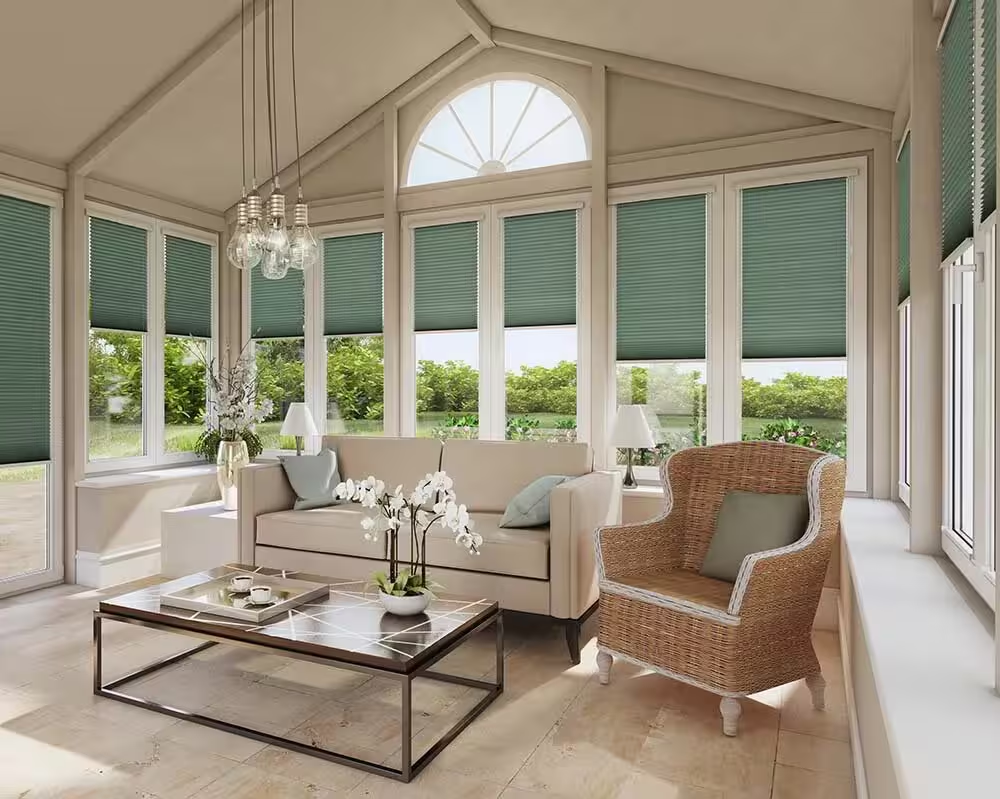
Top-down & bottom-up
- Standard casement windows
- Tilt & turn windows
- Conservatory windows
- French & patio doors
- Velux / roof windows
How it works
Concertina fabric between two moveable rails
Unlike a roller blind, which wraps fabric onto a tube, a pleated blind uses two horizontal rails — one at the top and one at the bottom — with fabric concertina-folded between them. Moving either rail closer to the other gathers the fabric into compact pleats; moving them apart stretches the fabric flat.
- Two rails, one fabric
The top rail is fixed to the top of the aluminium frame. The bottom rail is the operating bar, you push it up to open the blind (gathering fabric at the top) or pull it down to close. On the top-down option, the top rail becomes moveable too, so you can raise the blind from above instead.
- Fabric stays within the frame
The pleated fabric is always contained within the side channels of the outer frame at every position from fully open to fully closed. There's no trailing fabric, no overhang, and no risk of the blind catching on a window handle when you open or close the window.
- No drilling — pressure-fit brackets
As with all perfect fit blinds, the frame clips onto brackets seated between the glass and rubber glazing bead of your uPVC window. No tools, no screws, no fixings into the wall or reveal — and the whole assembly can be removed again in seconds with no marks left behind.
Key features
What makes perfect fit pleated different
The pleated is the most decorative and fabric-flexible option in the perfect fit range — and the only type that offers genuine top-down / bottom-up operation.
- Top-down / bottom-up
The top rail and bottom rail both move independently, giving you four distinct positions: fully open, fully closed, raised from the bottom, or lowered from the top. This is the feature that makes pleated blinds uniquely useful in rooms where you want daylight from above and privacy below or vice versa.
- Widest fabric range
Pleated blinds use flat fabric rather than a tube-wound fabric, which means the full width of the textile market is accessible – from sheer voile through to blackout, from plain weaves to bold printed patterns. More colour, texture, and opacity options than any other perfect fit type.
- Fully cord-free
The rails are operated by pushing or pulling by hand – no pull cord, no chain, no wand. The fabric is tucked within the frame side channels at all positions. Child and pet safe as standard, with no additional accessories required to meet UK child safety regulations.
- Minimal side light gaps
The pleated fabric runs within the side channels of the aluminium frame and sits flush against the edges at all positions. Side light bleed is dramatically reduced compared to a standard pleated blind hung on a track – making the pleated perfect fit one of the better options for bedrooms where light reduction matters.
- Opens with the window
Because the entire assembly clips to the glazed pane of the window, it pivots and tilts with the window when opened. On tilt-and-turn windows the blind tilts at the same angle as the glass. The concertina fabric is flexible enough to accommodate the movement without distorting the pleats.
- Professionally measured
Perfect fit pleated blinds are cut to the exact glass dimensions of your window. We take these measurements at your free home survey – the tolerance between the frame and the glazing bead is tight, and even a few millimetres of error would affect how the brackets seat and how the blind operates. Professional measuring is strongly recommended.
Fabric options
The broadest fabric choice in the range
Because pleated blinds use flat fabric rather than tube-wound fabric, the range of available materials is significantly wider than for roller or Venetian perfect fit types.
- Most popularSheer / voile
Translucent fabric that allows soft diffused light through while providing daytime privacy. The most popular choice for living rooms and kitchens where you want a bright room without direct glare. The pleated form gives voile a structured, architectural look that looks far more considered than net curtains.
- PracticalRoom darkening
Blocks most direct sunlight without achieving full blackout. Reduces glare and solar heat gain significantly – good for home offices, living rooms, and bedrooms where some ambient light is acceptable but direct sun is not. Available in a wide range of neutral and mid-tone colours.
- Best for bedroomsBlackout
Coated or foam-backed fabric that blocks direct light transmission through the fabric face, up to 95% light reduction when used with the perfect fit frame. Some perimeter light bleed at the frame edge is normal with any perfect fit type. Well-suited to bedrooms and nurseries where near-darkness is the goal.
- DecorativePatterned & printed
The perfect fit roller is available in patterned and printed fabrics , not just plains. Available in light-filtering weights across a range of colourways and geometric or botanical prints. Useful for children's rooms and rooms where the blind is a design feature.
Top-down. Bottom-up. Or both at once.
The top-down / bottom-up option is only available on pleated blinds — no other perfect fit type offers it. It works because the pleated mechanism uses two independent rails rather than a single cassette.
- Bottom-up (standard)
The bottom rail raises to open the blind from the bottom, gathering fabric upward. Privacy at eye level, daylight from above. The default operating mode on all pleated perfect fit blinds.
- Top-down (optional upgrade)
The top rail lowers to open the blind from the top, keeping the lower half closed for privacy whilst letting daylight in from above. Particularly useful for ground-floor rooms facing a pavement or road.
- Both rails at once
Adjust both rails simultaneously to expose a strip of glazing at any position — top, middle, or bottom. Full independent control over where the fabric sits within the window, at any time of day.
Frame colours
Matched to your window colour
Six standard frame colours to match the most common uPVC and aluminium window profiles so the blind looks integral to the window, not added on.
- White
- Cream
- Golden Oak
- Mahogany
- Grey
- Anthracite
Best applications
Where perfect fit pleated blinds work best
The pleated's combination of decorative fabric range and top-down / bottom-up operation makes it useful in rooms and situations where other perfect fit types fall short.
- 01Ground-floor front rooms
The top-down option is ideal for street-facing rooms — lower the top rail to let daylight in from above while the bottom half remains closed against the pavement view. Better privacy control than a standard bottom-up blind in any position.
- 02Tilt & turn windows
The frame clips to the glazed pane and tilts with the window — the concertina fabric flexes with the movement without distorting the pleats or pulling the rails out of position. A cleaner solution than any blind that sits in or around the reveal.
- 03Conservatories
One pleated blind per pane — they sit flush without trailing fabric around vents or between panels. The sheer and room-darkening fabric options are particularly useful in conservatories where glare reduction matters but blocking the view entirely does not.
- 04Bathrooms
The bottom-up option maintains privacy at eye level whilst the top stays clear for ventilation and daylight. Combined with moisture-resistant fabric, the pleated perfect fit is a practical and good-looking bathroom window solution — especially on small frosted windows where a full blind looks heavy.
- 05Children's rooms
Cord-free operation as standard — no hanging elements at any height. Blackout fabric blocks daytime light for naps. The patterned fabric range is widest on the pleated type, making it the most decorative perfect fit option for a child's room.
- 06Velux & roof windows
The perfect fit frame brackets onto the Velux window unit directly — the blind hangs at the same angle as the glazing and doesn't sag or slide. Blackout pleated fabric is the most popular choice for loft bedroom Velux windows.
Perfect Fit range
Other perfect fit blind types
Soft fabric folds, top-down / bottom-up option. Most decorative.
Aluminium slats – tilt for precise light and privacy control. Best for offices and home offices.
Clean., minimal. one of the most popular customer choices,
Honeycomb structure – the best thermal option. Ideal for conservatories and cold rooms.
Reviews
What customers say
"The top-down option in our living room is brilliant — we can have daylight from above while the bottom half stays shut against the street. Exactly what we needed and couldn't get from any other blind we'd looked at."
"Fitted to the Velux windows in our loft conversion — they clip straight onto the window frame and tilt with it when you open it. The blackout fabric means the bedroom is properly dark. The surveyor was honest and knowledgeable throughout."
"We chose the patterned fabric for our daughter's room and it looks lovely — much more considered than the roller blinds in the rest of the house. The whole process was smooth and the fitter was in and out quickly."
Perfect Fit Pleated FAQs
More questions? We'll go through everything at your free survey — no commitment required.
What is top-down / bottom-up and do I need it?
Top-down / bottom-up (TDBU) means both the top rail and the bottom rail move independently. Standard bottom-up opens from the bottom, letting light in from below while the top stays covered. Top-down opens from the top, letting light in from above while the bottom stays covered for privacy. TDBU is most useful in ground-floor rooms where street-level privacy matters — you can have daylight without being overlooked. It's an upgrade option on the pleated type and is not available on rollers or Venetians.
Is a perfect fit pleated blind blackout?
Blackout fabric blocks direct light transmission through the fabric face — typically 90–95% light reduction when combined with the perfect fit frame. However, some perimeter light bleed occurs around the frame edge where it meets the glazing bead. Complete blackout is not achievable with any perfect fit type due to this gap. For most bedrooms the level of light reduction is more than adequate; for total blackout, a cassette roller with a recess housing is the only reliable solution.
Can perfect fit pleated blinds work on tilt-and-turn windows?
Yes — and this is one of the strongest use cases for the pleated type on tilt-and-turn windows. The frame clips to the glazed pane and tilts with the window in both tilt and turn modes. The concertina fabric is flexible enough to accommodate the movement without pulling the rails out of alignment or distorting the pleats. The blind stays in position at any window angle.
Are perfect fit pleated blinds suitable for bathrooms?
Yes — the frame and brackets are aluminium and won't corrode. The fabric choice matters: moisture-resistant or PVC-coated pleated fabrics are best for bathroom windows that see regular steam and condensation. Standard woven fabrics will absorb moisture over time and may develop mould. We'll advise on the right fabric for your bathroom at the home survey.
How do I operate a perfect fit pleated blind?
Simply push or pull the bottom rail by hand — no cord, no chain. To raise the blind, push the bottom rail upward; to lower, pull it down. On top-down models, the top rail is also manually moveable. The rail travels within the side channels of the frame with a slight resistance that holds it in any position, so you don't need to fasten it at a specific point.
What's the difference between pleated and cellular perfect fit blinds?
Pleated blinds have a single layer of flat fabric folded into concertina pleats — they prioritise fabric variety and the top-down / bottom-up option. Cellular blinds have a honeycomb cross-section that traps air for thermal insulation — they prioritise energy efficiency and temperature control, particularly in conservatories. If warmth and temperature regulation matter most, choose cellular. If fabric choice and light control flexibility matter most, choose pleated.
How much do made-to-measure perfect fit pleated blinds cost?
Perfect fit pleated blinds are priced per window based on glass dimensions, fabric chosen, and whether TDBU is specified. They sit slightly above roller blinds in price due to the more complex mechanism and wider fabric range; TDBU adds a further increment. We give a fixed written price at your free home survey with no obligation to proceed — valid for 30 days.
Book your free survey – we'll check compatibility and measure up.
We come to you, check your windows are suitable, measure every pane to the millimetre, show you fabric and frame colour options, and give you a fixed written price. No obligation to proceed.
Free survey · Compatibility check · Fixed price · No obligation