
Hardwood Shutters
Solid kiln-dried timber, built to last 25 years or more. Available painted, stained, or oiled — across every shutter style we offer. The right choice for period homes, south-facing rooms, and anywhere that calls for a natural finish.
- Versatile
- Hard-wearing
- Energy Efficient
- 10 year guarantee
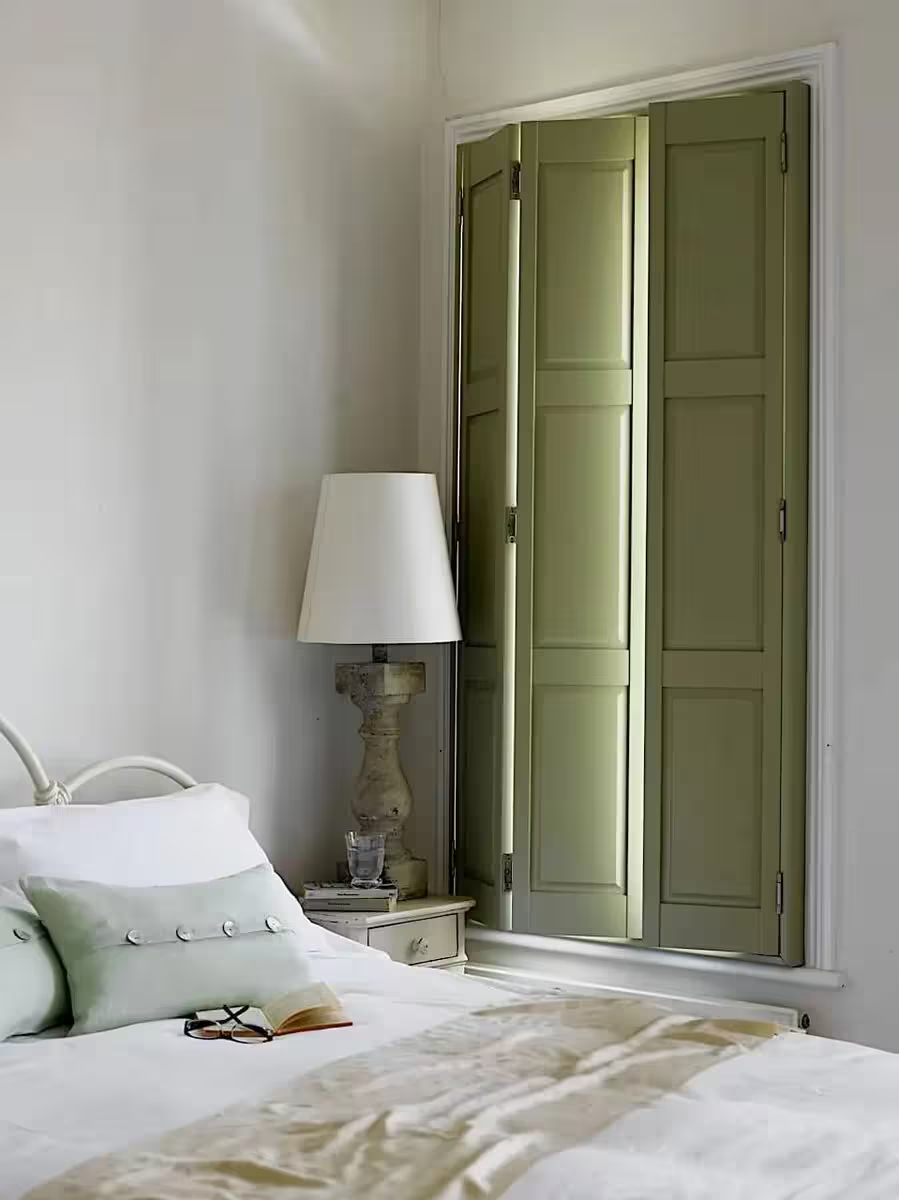
Why Choose Hardwood Shutters
Hardwood is the premium material option across our full shutter range. It costs more than MDF or faux wood — and there are specific reasons why that's the right call for certain rooms, window positions, and finishes.
Dimensionally stable under heat
Hardwood expands and contracts less than MDF when temperatures rise — making it the reliable choice for south-facing rooms, conservatories, and windows that receive direct sun through the glazing for extended periods. MDF can bow across a wide panel span in sustained heat; hardwood holds its shape.
Stained to show the natural grain
MDF has no grain — it can only be painted. Hardwood can be painted to an equally smooth finish, or stained with a semi-transparent wood stain to show the grain pattern through the finish. Oak, basswood, and paulownia each have distinct grain characters that read differently under a natural or light stain.
Holds fine detail at edges and profiles
The lower-panel format suits traditional bay windows and Victorian sash windows particularly well. Panels are made to measure for each individual section, so angled returns and uneven sill depths are handled without compromise.
Longer lifespan under daily use
Hardwood frames and louvres are denser than MDF — they resist chipping at hinge points, denting at panel edges, and surface marking on the louvre faces better over time. In rooms where the shutters are opened and closed every day, this density pays off across a 20–25 year lifespan.
Period-appropriate for traditional homes
In Georgian, Victorian, and Edwardian properties where original folding shutters were always made from solid timber, hardwood is the material that sits in keeping with the architecture. A painted hardwood shutter with a raised-and-fielded panel reads as part of the building's fabric in a way that MDF or faux wood doesn't.
Available across every shutter style
Hardwood is available as the frame and louvre material across our full shutter range — full height, café style, tier-on-tier, solid panel, shaped, and tracked door shutters. Louvre sizes (47mm, 63mm, and 76mm) and all frame profiles are available in hardwood. It is not a separate product — it is a material upgrade applied to your chosen style.
Harwood Shutter Styles
Discover our classic and stylish hardwood shutter styles. They can be tailor-made to either cover the full length of your window, or half, depending on your needs and tastes.

Covers the entire window top to sill. The most versatile style — works on any room, any window.
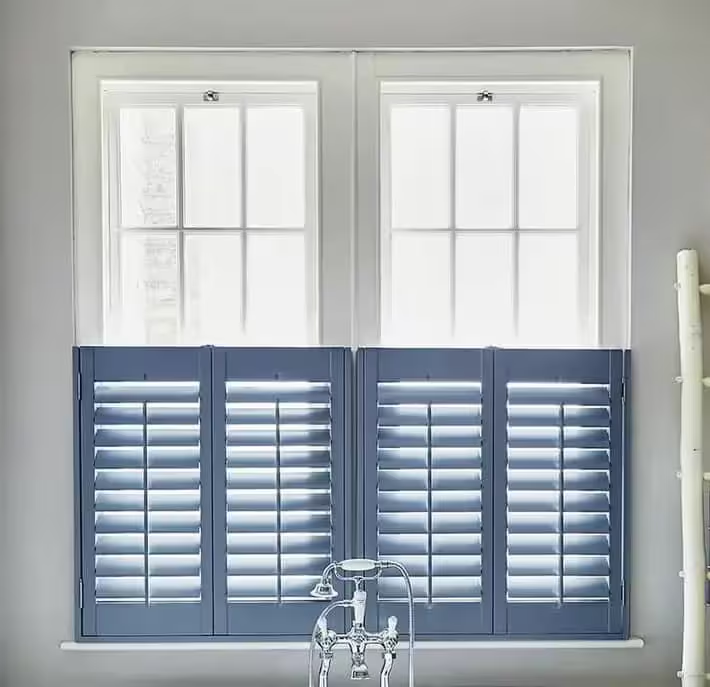
Lower half only — street-level privacy without losing daylight from above.
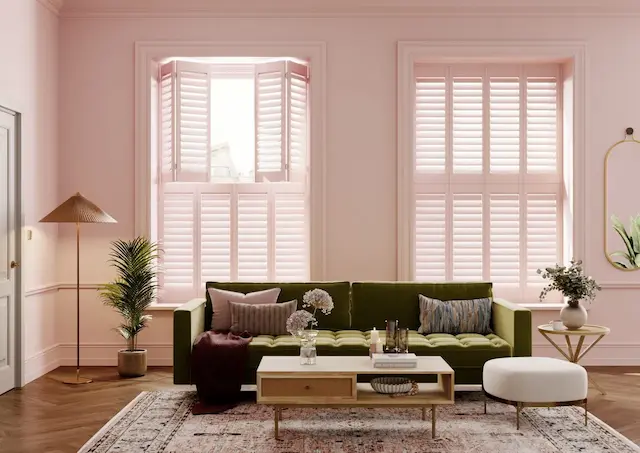
Upper and lower sections operate independently. Full coverage with maximum control.
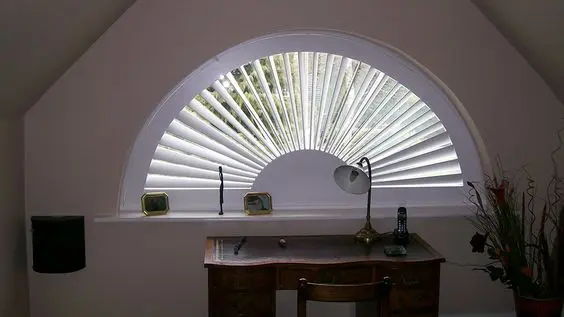
For arched, circular, and unusual windows. Templated on site for an exact fit.
No louvres — a clean solid face. Complete blackout and the best thermal performance.
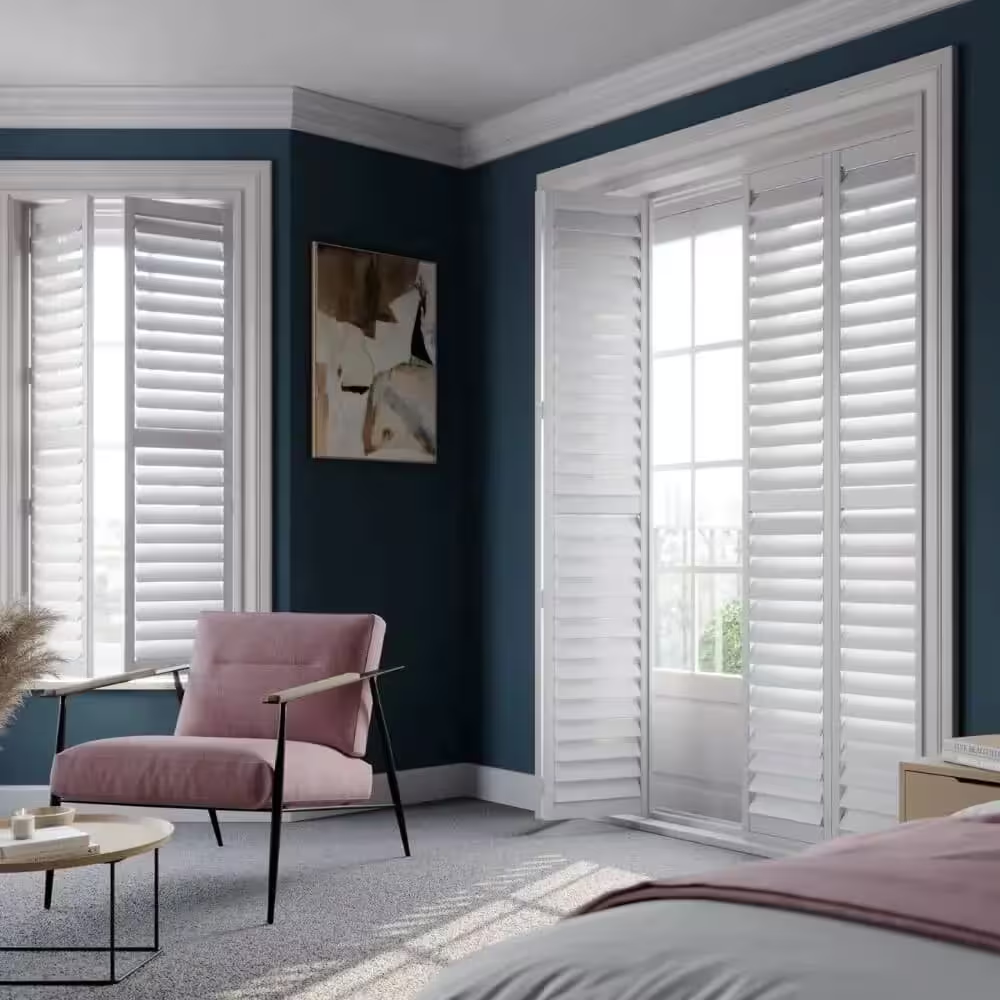
Slides open on a top track — no fold-back clearance needed. Ideal for French and patio doors.
Limited time offer
Book your free survey and lock in 25% off today.
No obligation. No deposit. We come to you, measure every window, and give you a fixed price with the discount already applied.
Book a Free SurveyFree survey · 25% off all styles · Fixed price · Professional fitting includedHow hardwood shutters are built and fitted
Hardwood shutters use the same L-frame, hinge, and tilt rod system as our other shutter materials — the timber species is what changes. The construction process has a few additional steps that MDF doesn't require.
Timber selection and kiln drying
Hardwood shutters are built from kiln-dried timber — basswood, paulownia, or oak depending on specification. Kiln drying reduces the moisture content of the timber to around 8–10%, which minimises movement once the shutters are installed in a heated room. Timber is graded before cutting to ensure consistent grain and colour across all panels in the same installation.
Frame construction and mortise joinery
The L-frame and panel frame are assembled using mortise-and-tenon or dowel joinery — the same methods used in traditional timber joinery rather than the adhesive-and-pin construction used in MDF panels. This gives hardwood frames their structural rigidity and resistance to racking over time. The frame is then sanded, primed, and finished before the louvres are fitted.
Louvre fitting and tilt rod routing
Hardwood louvres are bored at each end and fitted onto metal pivot pins seated in the side stiles of the panel. The tilt rod — a vertical timber or aluminium bar — is linked to every louvre via a small staple and clip at one end of each louvre. Pushing the tilt rod rotates all louvres simultaneously. The pivot pins are adjustable: if louvres become loose over time, tension can be increased with a small flathead screwdriver.
On-site acclimatisation before fitting
Hardwood shutters are delivered to site and left to acclimatise to the room's temperature and humidity for a minimum of 24–48 hours before fitting. This allows the timber to reach equilibrium with the room environment, reducing the risk of post-fit movement in the frame. The L-frame is scribed to the exact reveal dimensions and fixed before the panels are hung on their stainless steel butt hinges.
Hardwood Shutters FAQs
Which rooms and situations are hardwood shutters best suited to?
Hardwood is the right choice for south-facing rooms with sustained direct sun, rooms that fluctuate significantly in temperature (conservatories, rooms above garages), and period properties where the material needs to sit in keeping with original timber joinery. For stable, well-heated rooms without extreme temperature variation, MDF performs just as well at a lower cost.
What's the difference between hardwood and MDF shutters?
MDF is a manufactured board — consistent, stable in normal conditions, and takes paint very smoothly, but it has no grain and can warp in sustained heat. Hardwood is solid timber — denser, more dimensionally stable under temperature swings, and the only material that can be stained or oiled to show the grain. Hardwood costs more; it's worth the difference in specific conditions and applications.
How do I maintain hardwood shutters?
Painted hardwood shutters need no maintenance beyond regular dusting and occasional wiping with a lightly damp cloth — the same as painted MDF. Stained shutters can be refreshed with a matching wood stain every five to eight years if the finish dulls. Oiled shutters need a thin coat of hardwax oil every two to three years to maintain the protective layer — a straightforward job with a cloth.
What timber species are used for hardwood shutters?
Basswood is the most widely used species — it's lightweight, stable, and has a fine, consistent grain that takes paint and stain evenly. Paulownia is similarly light and stable with a slightly more pronounced grain. Oak is specified for premium stained installations where a strong, characterful grain is the intention. We'll advise on species at survey based on your chosen finish.